
Water systems that
work in the real world.
Ohm connects clean water needs with suitable technologies, suppliers and project support. We begin with the site, its water and the people who will use and maintain the system.
Discuss a water project

Understand the place.
Then design the system.
Our assessment-led approach for schools in Uganda: understand how water is obtained and used, review the existing system, and identify the checks needed before recommending solutions.
What the assessment covers
- Source, tanks and pipes: review supply reliability, tank condition, plumbing and drinking points with local plumbing input.
- People and demand: calculate drinking-water needs from pupil and staff numbers, daily routines and peak use.
- Existing costs: record water spending, firewood used for boiling drinking water and the staff time involved.
- Laboratory testing: coordinate independent local testing for bacterial contamination and other site-specific risks. Extended pathogen testing, including viruses, is scoped where required.
The aim is a clear picture of the need and informed next steps for designing a clean water system most suitable for your school or institution.
Discuss your school’s water needsFrom first visit
to ongoing care.
Our proposed delivery process for a school or institutional water project.
 01
01Visit and assess
Review the water source, tanks, pipes and drinking points with the institution and local plumbing input.
 02
02Test the water
Arrange a separate laboratory-coordinated sampling visit. Use the results to identify the treatment and further checks required.
 03
03Calculate demand and costs
Estimate capacity and peak demand. Compare proposed operating and maintenance costs with current water, boiling-fuel and labour costs.
 04
04Design and agree
Coordinate a site-specific proposal with technical specialists and suppliers, including local works, equipment, costs and service responsibilities.
 05
05Install, verify and maintain
For an agreed project, coordinate installation, performance testing and staff guidance, with a schedule for servicing, filter replacement and repeat testing.
What happens
after installation?
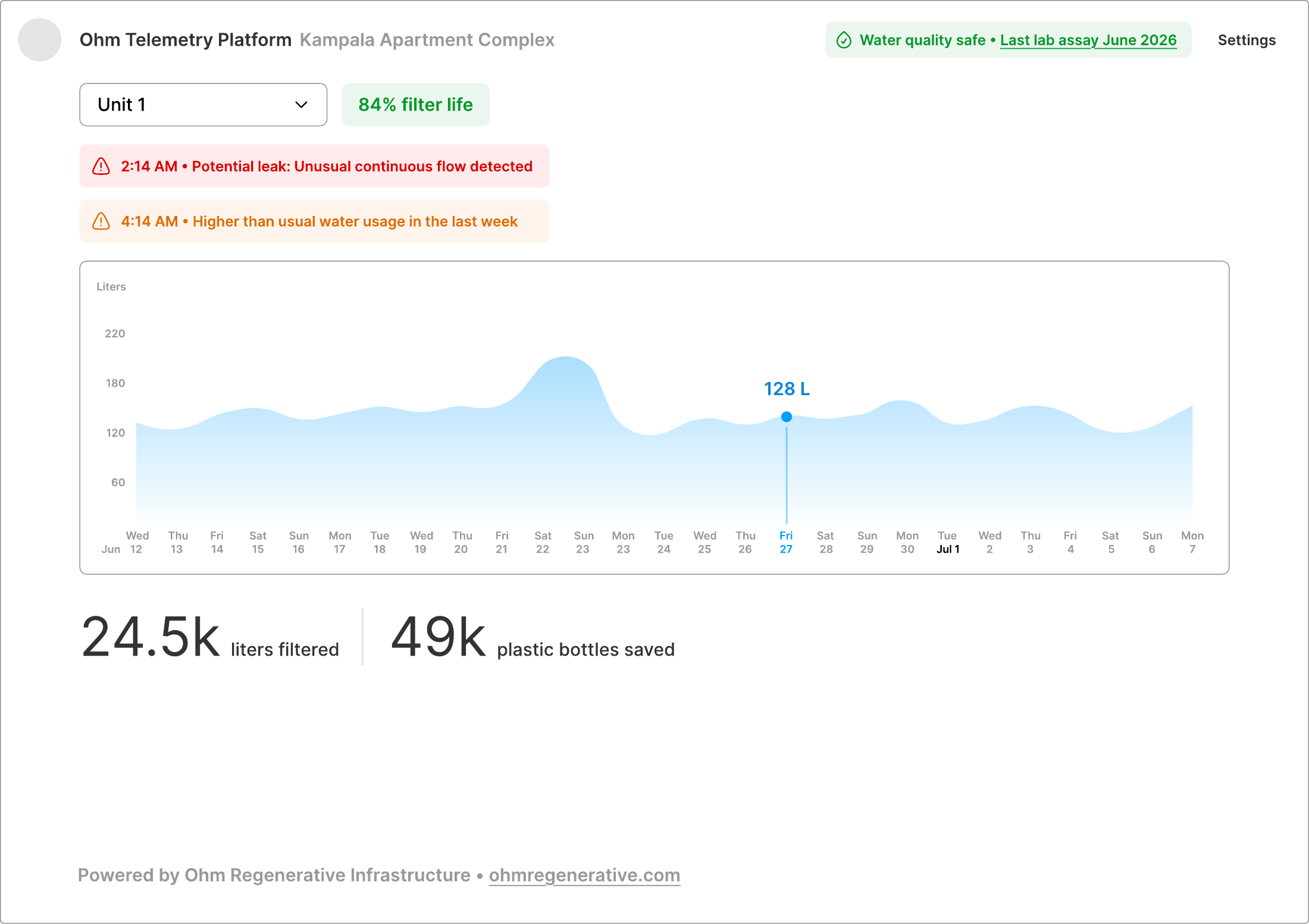
Our telemetry dashboard is designed to connect to IoT filter monitors to show water usage information and maintenance notifications alongside laboratory records. Different stakeholders have access to different levels of telemetry data.
 Explore the concept
Example figures do not represent a school, installation or measured Ohm results. Operational monitoring and laboratory testing serve different purposes.
Water is rarely just
an equipment problem.
Source, demand, power, operating costs and ongoing maintenance all shape what a useful system looks like.
A system needs a plan for the years after installation: who pays for servicing, who repairs it and where replacement parts come from. Our approach brings those decisions into the design, so drinking-water provision can become a lasting part of the institution.

Costs that work over time
Compare the cost of the proposed system, testing and upkeep with existing spending on drinking water, including boiling fuel and staff time. The aim is a service the institution can continue to afford.

Local care and responsibility
Plan servicing, replacement parts and clear responsibilities from the start. Local plumbers and technicians should be able to maintain the system, with technical support when it is needed.

Build local capability
Our intended model combines suitable filtration technology with locally sourced tanks, plumbing and fabrication where feasible. As projects develop, we aim to create opportunities in installation, maintenance, assembly and manufacturing.
A water need worth understanding?
Tell us about the location, source, intended users and the challenge you want to solve.
Prepare a project enquiry +
Show LINE QR code +

Scan to add Ohm on LINE, or use the message link above.